
WHALE SEASON IN UVITA
Costa Rica is home to two unique migrations of humpback whales, rendering the Pacific waters of this country an essential ecosystem for the preservation of these ocean giants.
Southern Humpback Whales (July to October) :
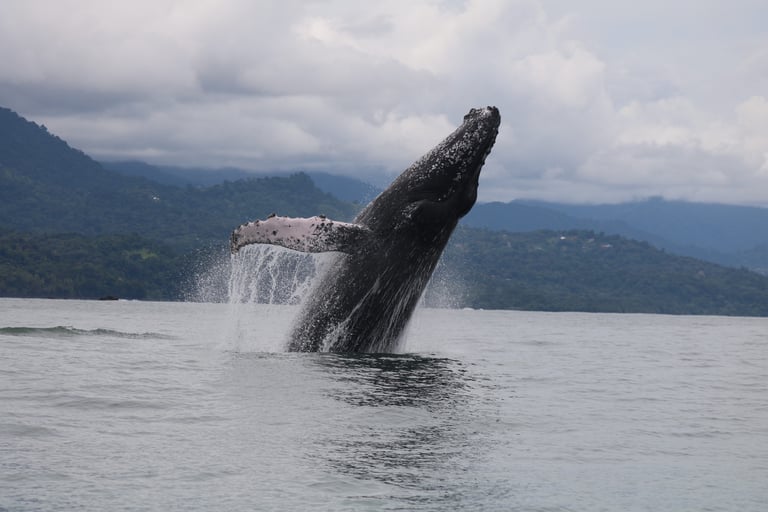
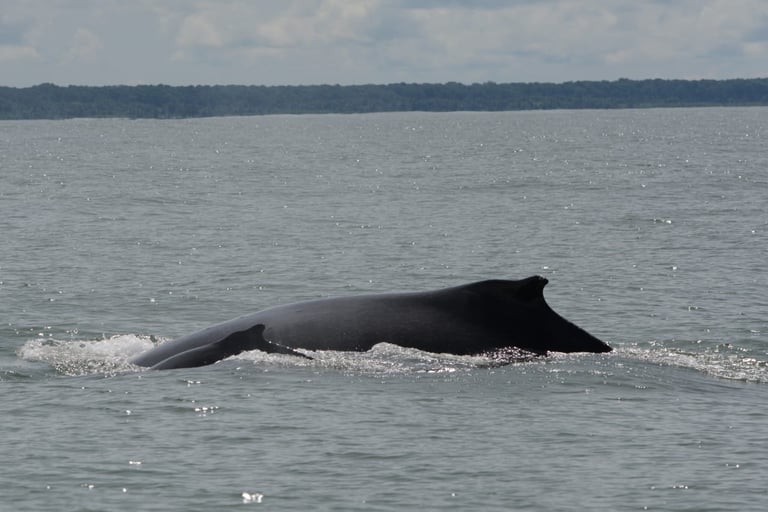
This timeframe is recognized as the "rainy season," when we welcome the southern humpback whales that migrate from Patagonia in South America to the warm waters of the South Pacific along Costa Rica's coast. Their main objective is to give birth to their calves, known as ballenatos, while some engage in courtship. The warm waters in the bay present numerous benefits for raising young whales and provide shelter from their key predators, including orca whales and certain sharks. The whale population in this southern region is quite significant, leading to frequent sightings during whale-watching excursions. Initial sightings generally take place in the second and third weeks of July, with August and September being the peak months when the chances of sightings surpass 90%.
Northern Humpback Whales (Late December to February) :
This time of year is known as our dry season and marks the arrival of humpback whales from the Northern Hemisphere. They begin to arrive in late December as they migrate from Oregon, with the same goals of reproduction and courtship. The population of these whales is notably smaller, which results in lower sighting percentages compared to the southern species.
Responsible Whale Watching and Community:
To highlight the importance of cetaceans and other inhabitants of this bay area to the local economy, Bahia Ballena has designated September as the whale month in Costa Rica. Throughout this time, a celebration known as the Festival of Whales takes place, inviting both locals and visitors to learn about whales to promote greater awareness for the conservation of these species. During the festival, reduced price tours are offered to locals, along with various activities aimed at educating people about our marine and terrestrial resources. (NOTE: The Whale’s Festival 2026 will occur on September 4, 5 & 6).
In the 1970s, 80s, and part of the 90s, Bahia Ballena was mainly a fishing village. Toward the end of the 90s, local fishermen began offering boat rides to beachgoers, showcasing the island and coastline while allowing them to observe dolphins and whales. At the turn of the millennium, the Costa Rican government started supporting locals providing these tours by offering necessary training to conduct excursions responsibly, guiding and coaching captains to formalize the tours.
Today, the tourism sector in Bahia Ballena, Uvita, is highly professional, utilizing bilingual guides and captains certified by the Costa Rican Chamber of Tourism (ICT) and organized into associations. There are approximately ten well-structured whale-watching companies in Bahia Ballena that also offer additional activities.
Whales and dolphins, like all living beings, are susceptible to human effects on their environment. Implementing eco-friendly practices during tours is crucial for their protection.
Currently, Coral Expeditions Costa Rica has established a protocol for sightings to lessen the impact on cetaceans. This protocol mandates maintaining a safe distance from dolphins while travelling at the same speed and direction as them. In Costa Rica, swimming near cetaceans is not allowed to prevent disruption to their habitat or behaviour. It is vital for experienced captains and guides to judge whether the whales or dolphins may feel threatened by observing and interpreting their behaviour. The captain is responsible for deciding whether to proceed or cease sightings, respecting the space of these beings. Choosing any of our tours guarantees a safe and informative experience.
Tours
info@coralexpeditionscr.com
+506-8401-7444
© 2025. All rights reserved Coral Expeditions Costa Rica.
Destinations
Company
Costa Rican boat tour operator for Whale and dolphin watching tours and other marine activities located in Bahía Ballena, Uvita, Osa Peninsula